COURSE DETAILS
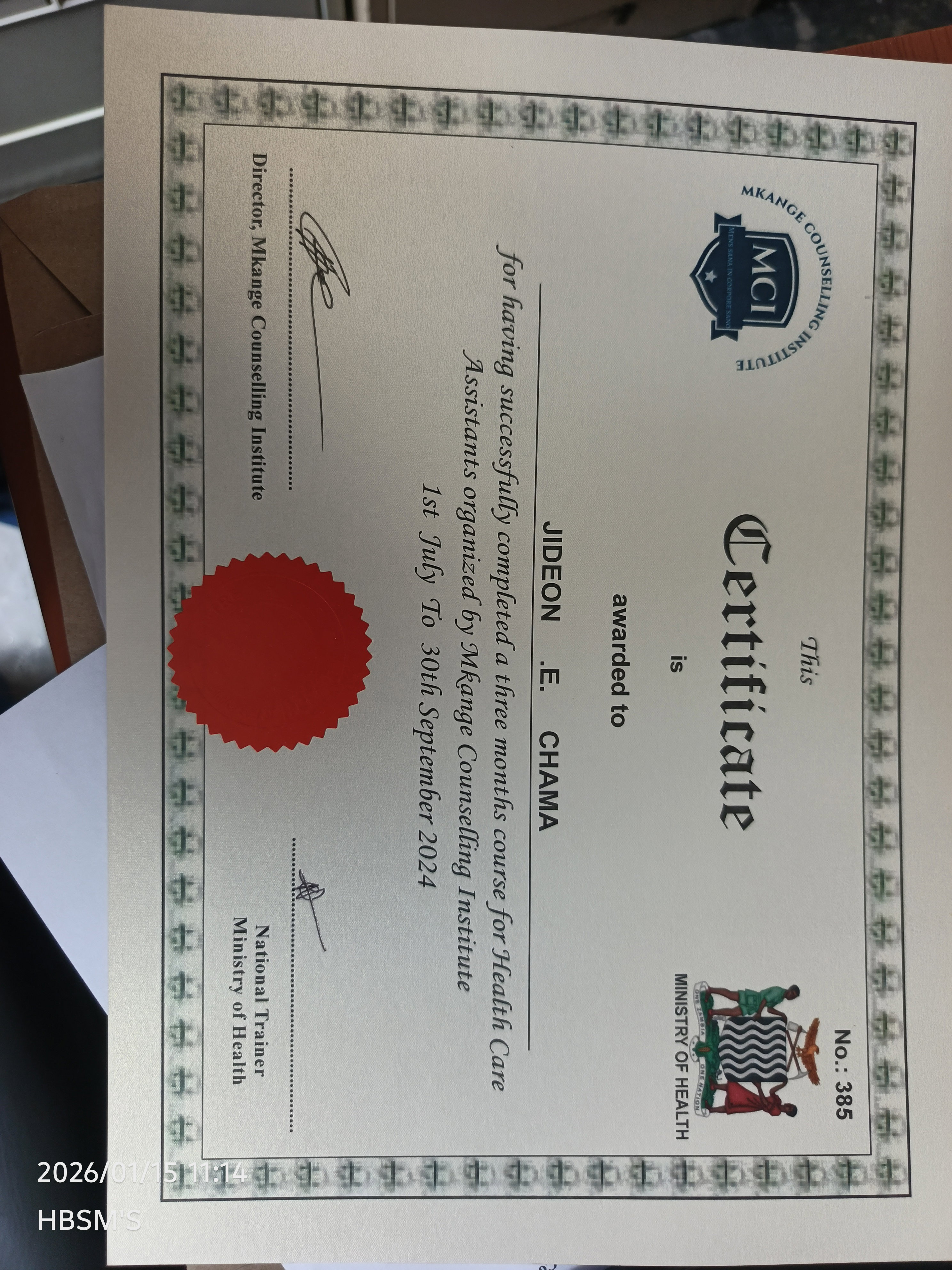
Health Care Assistant (Nursing Assistant)
Duration: 3 months
Fees
Tuition fee ZMW2000 ($100)
Form ZMW100 ($5)
Modes of learning: online and on-site classes are available.
Minimum Entry requirements/Qualification
-G9 certificate
-Able to read and write in English
-18 years and above
This Nursing Assistant Training course provides foundational knowledge and practical skills for aspiring nursing assistants. The curriculum covers essential aspects of caregiving, patient safety, communication, working with diverse populations, and promoting professional success. Learners will explore the roles and responsibilities of nursing assistants, understand the needs of various patient groups, and master personal care and safety procedures. The course emphasizes ethical practice, effective communication, and holistic care, preparing students to work in hospitals, care homes, hospices, and community settings. By integrating theory with hands-on practice, the program aims to produce competent, compassionate, and adaptable nursing assistants ready to meet the challenges of modern healthcare environments.
General Objectives
By the end of this course, learners will:
1. Demonstrate understanding of the roles, responsibilities, and ethical standards of nursing
assistants.
2. Provide safe and effective care to diverse patient populations, including the elderly,
chronically ill, and those with disabilities.
3. Apply principles of infection control, injury prevention, and emergency response.
4. Communicate effectively with patients, families, and healthcare teams.
5. Exhibit professionalism and readiness for employment in healthcare settings.
Unit 1: Being an Assistant Nurse
Describe the primary duties and responsibilities of a nursing assistant.
Demonstrate basic physical assistance and hygiene care for patients.
Accurately measure and record vital signs.
Communicate patient concerns to registered nurses or doctors.
Unit 2: People in Your Care
Identify the needs of frail and elderly patients.
Provide care for acute and chronically ill individuals.
Support patients with physical and mental challenges.
Recognize and respond to adults and children in need of protection.
Unit 3: The Human Body and Its Functions
Explain the major systems of the human body and their functions.
Relate anatomical knowledge to patient care activities.
Recognize signs of physiological distress or abnormality.
Apply basic principles of growth, development, and aging.
Unit 4: Communication
Demonstrate effective verbal and nonverbal communication skills.
Apply active listening and empathy in patient interactions.
Use appropriate communication channels for different situations.
Provide and receive constructive feedback in the workplace.
Unit 5: Working with the Elderly
Recognize physical and mental changes associated with aging.
Address social factors affecting elderly well-being.
Promote healthy aging through lifestyle and preventive care.
Support elderly patients in maintaining independence and dignity.
Unit 6: Promoting Safety
Implement infection control measures and hand hygiene protocols.
Use personal protective equipment (PPE) correctly.
Identify and mitigate environmental hazards to prevent injuries.
Respond appropriately to emergencies and incidents.
Unit 7: Nutrition and Meal Preparation
Apply principles of balanced nutrition in meal planning.
Prepare and serve meals according to dietary guidelines.
Educate patients and families on healthy eating habits.
Ensure safe food handling, storage, and modified diets.
Unit 8: Providing Care
Measure and interpret vital signs accurately.
Assist with personal cleanliness, grooming, and comfort.
Provide restorative care and promote patient independence.
Support patients with mobility, positioning, and transfers.
Unit 9: Preventing Injuries
Identify common causes of injuries in home and healthcare settings.
Apply injury prevention strategies for different age groups.
Respond to accidents and emergencies using first aid techniques.
Maintain a safe environment for patients and staff.
Unit 10: Personal Care Skills
Perform personal care activities such as bathing, dressing, and oral hygiene.
Manage pain and provide comfort measures.
Assist with mobility and use of assistive devices.
Promote skin, hair, and foot care for patient well-being.
Unit 11: Special Care Situations
Provide care for patients with dementia and cognitive changes.
Adapt care for individuals with mental health symptoms.
Identify and respond to challenging behaviors.
Support family caregivers and collaborate with healthcare teams.
Unit 12: Enjoying Professional Success
Adhere to employer policies and professional standards.
Maintain certification and participate in ongoing training.
Manage workplace stress, conflict, and communication.
Develop a personal plan for career growth and lifelong learning.